











Rajshahi’s Rising Noise Pollution: A Growing Threat to Public Health and Environment
Dr. Engr. Md. Zakir Hossain Khan
Rajshahi, once renowned for its greenery and relatively peaceful environment, is increasingly suffering from noise pollution. Uncontrolled traffic, poorly managed electric three-wheelers (E3Ws), excessive horn use, unauthorized parking and the loss of roadside trees are contributing to a deteriorating urban environment. This is no longer merely a traffic-management problem; it is a growing public-health concern requiring urgent intervention.
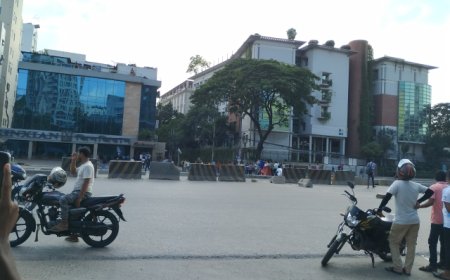
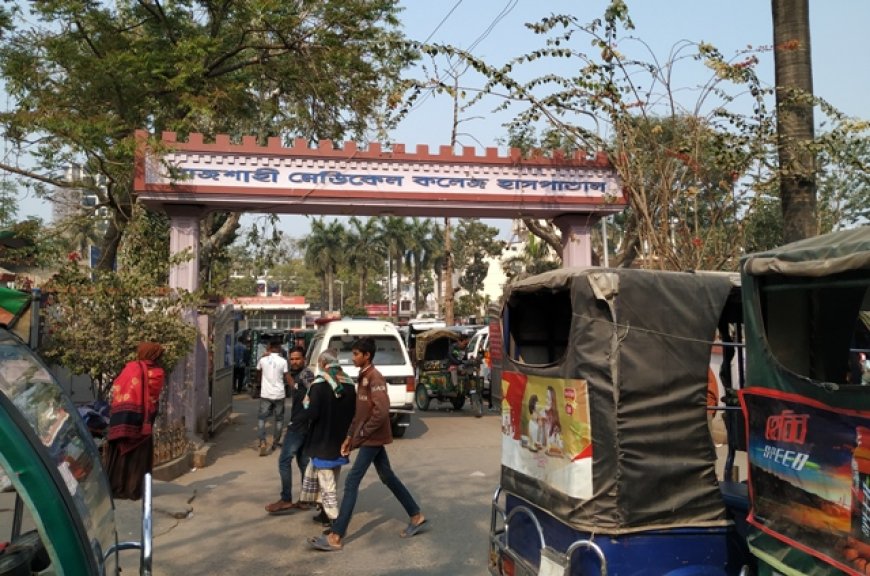
Based on my observations and noise-level monitoring since 2022, noise pollution has increased at several locations in Rajshahi. At Railgate, a major commercial and traffic-congested area, the average daytime noise level on a working day was approximately 92 dB in 2022, rising to around 101 dB in 2026. At LaxmipurMor, approximately 100 metres from Rajshahi Medical College Hospital, the observed average was around 102 dB. These observations warrant systematic investigation, particularly because hospitals and other sensitive locations require effective noise control.
Under the Noise Pollution Control Rules 2025, the applicable noise limits and zone classifications should be verified and enforced at these locations. If representative measurements confirm such high levels, immediate regulatory action is necessary.
Noise pollution is a public-health emergency
Excessive environmental noise can contribute to hearing damage, sleep disturbance, stress, impaired concentration and cardiovascular health risks. Students may experience difficulty concentrating, while patients need a quieter environment for treatment and recovery. Residents and workers beside busy roads may have little opportunity to escape persistent exposure.Authorities must recognize that noise is an environmental pollutant, just like contaminated air and water. Its invisibility does not make it less harmful. The priority must be to control noise at its source rather than expect people to tolerate it.
Regulate E3Ws and excessively loud horns
The growing number of E3Ws appears to be one factor associated with congestion and noise in Rajshahi. Haphazard parking, irregular movement and excessively loud electric horns, commonly known as TT horns, aggravate conditions at busy intersections. However, systematic traffic and noise monitoring is needed to establish their precise contribution.E3Ws provide affordable transport for many people, so blanket restrictions are not the answer. Authorities should establish authorized routes, designated stopping points, organized parking and enforceable operational rules. Excessively loud and non-compliant horns must be prohibited through vehicle inspections and appropriate penalties. Any alternative horn, including a Vepu horn where legally permitted, must satisfy applicable noise standards.
Reorganize congested transport facilities
Unauthorized CNG parking and uncontrolled passenger pick-up and drop-off at Railgate obstruct traffic, increase congestion and encourage repeated horn use. Designated parking and loading zones, clear road markings and consistent enforcement would help restore traffic discipline.The proposed relocation of the bus terminal near the railway station to Aam Chattar should undergo an urgent traffic and environmental assessment. Road capacity, passenger accessibility, pedestrian safety, air pollution and noise impacts must be evaluated before implementation. If feasible, relocation with adequate facilities and proper traffic planning could reduce congestion in Talaimari, Vodra, the railway-station area and Railgate without transferring the problem elsewhere.
Strengthen monitoring and environmental enforcement
The Department of Environment (DoE), Rajshahi Metropolitan Police and Rajshahi City Corporation should introduce a coordinated noise-control programme. Calibrated sound-level meters should be used for regular monitoring at hospitals, educational institutions, major intersections, commercial areas and residential neighbourhoods. A citywide noise pollution map should identify hotspots and guide enforcement. Monitoring results should be published periodically, with clear targets for reducing noise at the worst-affected locations. Legally authorized inspections and mobile courts, where appropriate, should target repeat violations, particularly around hospitals and other designated sensitive zones.
Restore urban greenery
The loss of roadside trees associated with unplanned urbanization has weakened Rajshahi's environmental quality. Existing mature trees should be protected, while scientifically designed green belts should be established along suitable roads and around public institutions.Trees can help reduce perceived traffic noise under appropriate conditions while providing shade, supporting biodiversity and improving urban comfort. However, plantation alone cannot solve the problem. Source control, traffic discipline and enforcement must remain the primary interventions. Plantation programmes should be assessed through tree survival and canopy development, not merely the number of saplings planted.
Immediate action is essential
Rajshahi needs measurable noise-reduction targets, clearly assigned institutional responsibilities and annual public reporting. Hospitals and educational institutions should receive priority, and interventions should be evaluated through repeat measurements under comparable conditions.The Department of Environment, Rajshahi Metropolitan Police, Rajshahi City Corporation and transport authorities must work together rather than rely on occasional campaigns.
Rajshahi cannot claim to be a healthy, sustainable city while its residents face dangerously high levels of environmental noise. Regulating E3Ws, eliminating excessively loud horns, controlling unauthorized parking, reorganizing transport facilities and protecting urban greenery are practical steps towards reversing this trend.The people of Rajshahi deserve streets where traffic moves efficiently without compromising public health. The time has come to replace fragmented initiatives with sustained, evidence-based and enforceable noise management.
(Author is Assistant Professor, Department of Civil Engineering in Bangladesh Army University of Engineering & Technology, Natore. He can be reached [email protected]. Opinions expressed in this article are his personal.)
What's Your Reaction?