
















Padma Water Is Not Charity, It Is Our Right
- Dr. Engr. Md Zakir Hossain Khan
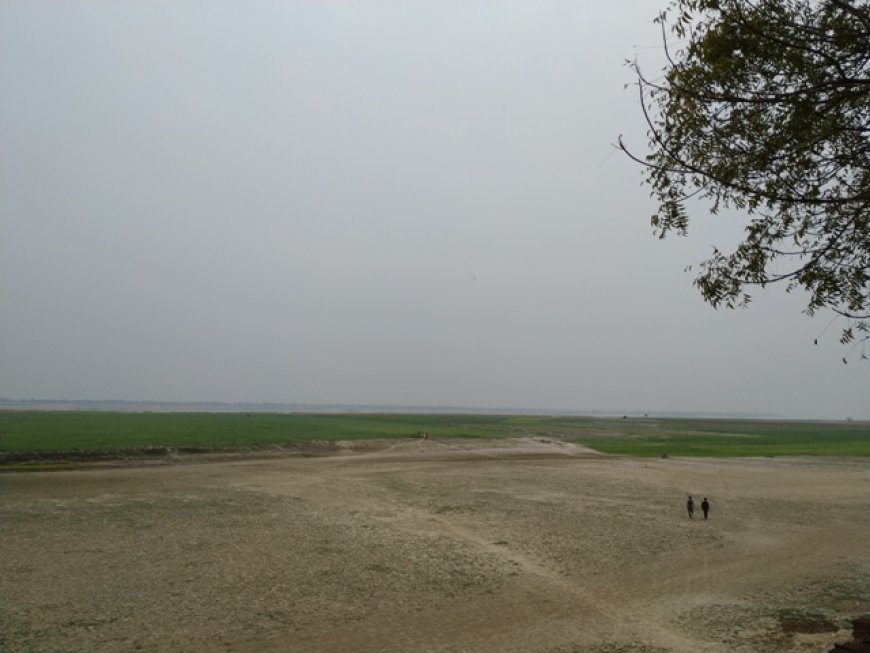
The life and environment of the Rajshahi region are now facing a deep and dangerous crisis. The Padma River, which was once the source of life, economy, and culture in this region, now remains dry for most of the year. Vast sandbars, dust storms and the dried-up riverbed stand as witnesses to a harsh reality.
Due to the long-discussed Farakka Barrage, the natural flow of water during the dry season has been severely disrupted, and the Rajshahi region is paying the direct price for it. This crisis is no longer only environmental; it is also a reflection of political, diplomatic, and policy failures.
Due to water scarcity, vast char areas, agricultural lands and river-based biodiversity in Rajshahi are on the verge of destruction. An economy that once developed around the river is now collapsing as the river dries up. The biggest blow has come to the river transport sector.
The Padma River was once the main waterway of northern Bangladesh, but today it has lost its navigability and turned into a dying river. Transportation of goods is being disrupted, transportation costs are rising and river-based trade and commerce are gradually shutting down. A river is not just water; it is the bloodstream of a region’s economy, and that bloodstream is now being dried up.
The fishery sector has also suffered from a devastating impact. Due to the reduction in river flow and depth, fish breeding has been severely affected. Many indigenous fish species are now on the verge of extinction. Fishing communities are losing their traditional livelihoods and are facing extreme uncertainty. This is not only an economic loss; it is a social, cultural, and humanitarian disaster.
The reduction in river flow is also directly affecting groundwater levels. Without the natural flow of the river, groundwater recharge is being hindered, causing the water level to drop rapidly. In 2025, 47 upazilas in northern Bangladesh were declared severely water-stressed areas, clearly reflecting the severity of the crisis. This water shortage is threatening not only agricultural production but also daily life, public health, and environmental balance.
The Ganges Water Sharing Treaty signed between Bangladesh and India in 1996 has a duration of 30 years, which will expire in December 2026. Although the treaty determines how the Ganges water will be shared between the two countries through the Farakka Barrage, Bangladesh does not receive sufficient water during the dry season. In this context, the importance of international legal frameworks is extremely significant.
The Convention on the Law of the Non-Navigational Uses of International Watercourses, adopted by the United Nations General Assembly in 1997, is an important international agreement that establishes principles for the equitable, sustainable, and cooperative use of transboundary rivers and related groundwater. The fundamental principles of this convention are “equitable and reasonable utilization” and “no significant harm,” meaning that no country should use water unilaterally in a way that harms another country.
However, the unfortunate reality is that Bangladesh has not yet fully utilized this international legal framework. Nearly three decades have passed without taking the necessary steps. This delay is no longer acceptable. It is not merely administrative slow progress; it amounts to neglect of national interest. Now is the time to say clearly — The water of the Padma is not charity, not a favor; it is our rightful share, it is our right. This right must be demanded and secured. Diplomatically, legally, and in the international arena, this demand must be raised strongly everywhere.
Therefore, in the interest of protecting the existence of greater Rajshahi and the entire northern region, the Government of Bangladesh must immediately ratify international water-sharing conventions and take a strong legal and diplomatic position to ensure a fair share of water from transboundary rivers. Because this issue is no longer just about the water of a river, It is about the economy, environment, human lives, and the existence of future generations of an entire region.
(Author is Assistant Professor in the Department of Civil Engineering in Bangladesh Army University of Engineering and Technology, Natore)
What's Your Reaction?