


How rejecting European integration could affect Georgia's environment
Marta Abbá and Alex Regel
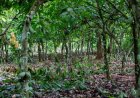
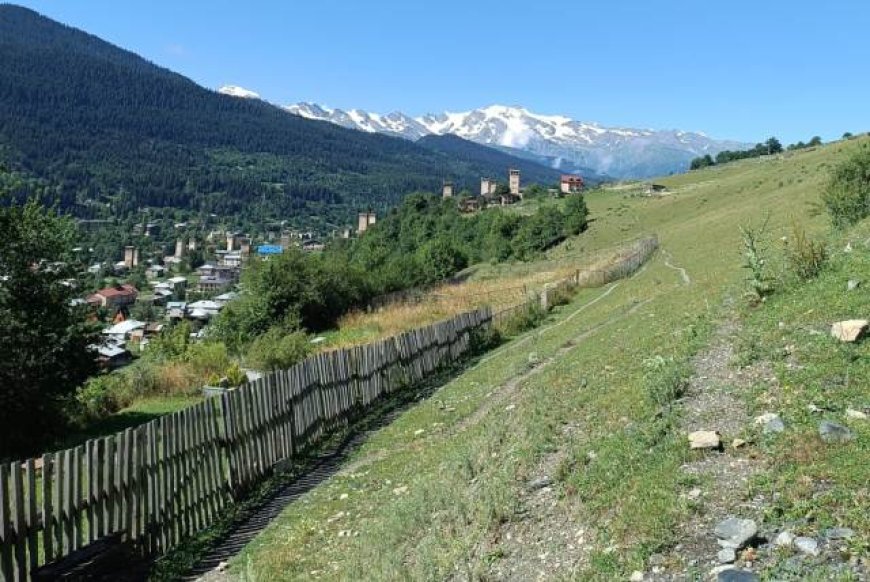
Georgia is a country with amazing nature that attracts thousands of tourists every year, including from European countries. Here you can see everything—from the forests of Kolkhida National Park, which stretch right down to the sea on one aide and on the other side lost in the Amazon-like jungles of Paleostomi, to the amazing mountains of Svaneti and Tusheti, with their fast-flowing rivers and majestic glaciers, and even the deserts of David Gareja and Vashlavani. You can live for years in this small country and still not see it all. However, Georgia's nature is under threat, primarily due to human activity. The downside of tourism, which brings income to local residents, is intensive construction and unsustainable infrastructure development, leading to the disappearance of wild places and pollution of nature.
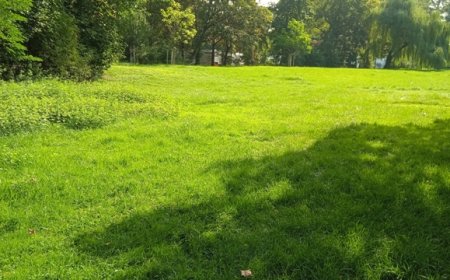
If you drive along the Black Sea coast of Georgia today, you may get the impression that it is one endless construction site, with uncontrolled garbage dumps as a direct or side effect. This is happening not only on the Black Sea coast, but also in Svaneti, Imereti, and other regions of Georgia. Environmental activists are trying to cope with this uncontrolled pollution of the environment. The most striking example is the fight for the floodplains in the Digomi district of Tbilisi, the so-called Digomi meadows, which were practically destroyed precisely because of unauthorized dumping.
Environmental organizations and activists have played and continue to play an important role in protecting the environment in Georgia. It is noteworthy that the history of the environmental movement in the country is quite remarkable, often associated with victories or influence on legislative and political decisions. At least, that was the case…
In 2021, active civil protests against the construction of the Namakhvani HPP by Turkish company ENKA led to abandoning the project, which could have changed the course of the Rioni River and affected not only local residents but also the entire development of the ecosystem. Activists from Rustavi, an industrial city known since Soviet times for its toxic metallurgical production, also achieved a great deal. Their actions influenced the adoption of a law restricting emissions.
The dialogue with environmental activists was also facilitated by Georgia's policy of European integration, which involved the gradual alignment of local regulations with EU environmental and climate standards. In addition, a large number of environmental programs were implemented in the country, which were, so to speak, part of Georgia's green transformation routine. Many of the projects were implemented with the support and funding of the EU. Examples include Green Agenda, EU4Climate, EU4Environment, and others. European funds, such as the European Endowment for Democracy (EED), also provided financial support to environmental activists and organizations in the implementation of their small projects.
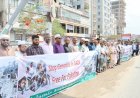
The situation changed in 2024 when Georgia's ruling party, Georgian Dream, first introduced a law on foreign agents and then monopolized power after the parliamentary elections in the fall of 2024, which the European Union did not recognize. All this was accompanied by mass civil protests, in which environmental activists also took part. The protests continue to this day, but they have become less widespread, and various forms of repression have begun in the country. The first political prisoners appeared, and many non-governmental organizations found themselves on the verge of liquidation. Relations between European countries and the ruling Georgian Dream party deteriorated
Representatives of Georgian Dream accused the EU of interfering in the country's internal affairs, while EU representatives noted Georgia's violation of its commitment to democratic principles and its 180-degree turn in the process of European integration and, as a result, suspended the country's candidate status.
Today, the situation in Georgia can be described as political depression, with many activists lacking the motivation and support to continue their activities. This is evident in both the environmental and climate movements. Many organizations have refused to register under the law on foreign agents, as this would not only lead to the recognition of the legitimacy of Georgian Dream, but would also complicate their work. In effect, this would mean stigmatising organisations as foreign agents, which could undermine the trust of the local population. However, they cannot operate without official registration. As noted by a representative of the environmental movement who wished to remain anonymous, it feels like a return to the USSR, where the word "agent" can also be interpreted as "spy".
“The operating environment for environmental NGOs has become more uncertain and constrained. Even organizations working on non-political issues such as biodiversity protection, climate adaptation, or conservation have faced new risks. The introduction of the foreign agents framework created a structural dilemma: either register and face reputational and operational consequences, or refuse registration and operate under legal and financial uncertainty. There are different approaches among organizations, but most chose the second option and adapted by reducing scale, diversifying funding, relying more on expert networks, volunteer engagement, or international partnerships. This has allowed them to continue their work, but with higher costs, greater insecurity, and limited long-term planning. At the same time, the situation for CSOs in general is dangerous, as funding challenges have pushed many of them toward dissolution. Some organizations continue to operate only because they still have existing funds, but many are reaching the end of their projects, which means that even more organizations may stop functioning in 2026”, mentioned Nugzar Kokhreidze from RicDog, who also represented Georgia in CAN EECCA .
There are also difficulties in obtaining funding. The law on foreign agents, which Georgian Dream calls the equivalent of the US FARA, can be interpreted in different ways. Both organizations and individuals can be designated as foreign agents. This jeopardizes any funding from abroad. As a result, large funds are now trying to avoid working with Georgian organizations, and the organizations themselves are completing their projects and closing down. . Moreover, the Georgian government is continuing to tighten its laws on foreign funding, with any financial assistance from abroad potentially leading to fines or even criminal charges. The impression is that the government itself is more interested in developing Georgia than in preserving its natural environment. This is also confirmed by numerous development projects, such as the Eagle Hills project.
All this hurts areas that have been the prerogative of NGOs since the 1990s. For example, by 2025, there was already a noticeable rollback in environmental and climate policy. The government began to lower environmental protection requirements and standards, or simply hand over nature conservation areas for construction. One of the most famous cases of the last year is Eagle Hills' plans to build in the Chorokhi River delta, which could lead to the destruction of an area important for bird migration that is part of the European Emerald Network project.
Environmental and climate issues in Georgia
However, environmental and climate problems are not getting any better in the country. As already noted in the article, the main problem is unsustainable construction projects that do not take into account their impact on the environment. This is not a new problem in Georgia. For example, the construction of a hydroelectric power plant in Adjara led to the emergence of environmental migrants back in the 1990s, when villagers were forced to leave their areas due to landslides caused by soil removal for construction.
A new problem for the country could be the plans of the Arab company Eagle Hills to start construction in the Gonio area in the Chorokhi River delta and in Krtsanisi Park near Tbilisi. Activists fear that the park will be completely chopped and the capital's "green belt" destroyed. The development could also affect the Panichala reservoir, unique to the Mtkvari River delta, which is popular with birdwatchers and has protected status.
As for the project in Gonio, the Chorokhi Delta not only has the environmental protection status of the Emerald Network, but is also a key bird migration zone through the Transcaucasian corridor, and building here could have cross-border consequences. It is also a tourist attraction in Batumi, where part of the Batumi Birdwatching Festival takes place. In addition, the Chorokhi River is a coast-forming area. Zura Gurgenidze of the nature conservation organization SABUKO calls the Chorokhi Delta one of the most important areas in terms of biodiversity conservation. The construction of the complex will not only close off this area, but also destroy it. The consequences could be catastrophic.
The development of the Black Sea coast as a whole is a cause for concern. As ecologist and ichthyologist Archil Guchmanidze noted on social media, the construction of a complex of artificial islands in the Batumi area has already led to the release of fuel oil that had remained at the bottom since Soviet times, resulting in damage to waterfowl. At the same time, development is proceeding without adequate infrastructure development. Wastewater treatment projects were funded by the EU, but today, part of the sewage on the Black Sea coast still simply flows into the sea. Arab and Turkish investors, who are the main financiers of construction on the Black Sea coast now, are not particularly sensitive to the environmental impact of their projects and often do not prioritize high environmental and climate standards.
Another problem is glacier melt, which is directly linked to climate change and also requires transboundary monitoring and high levels of funding. Glacier melt has already led to tragedy in Shovi, resulting in the deaths of more than 30 people. The Georgian government recently announced that a Swiss company had studied more than 22 glaciers and developed recommendations for establishing a warning system. However, the first scientific inventory of the rock glaciers of the Greater Caucasus was only carried out in 2023, the year of the Shovi tragedy. It is good that this issue has begun to be discussed, even if it was after such a tragic event. It is important that research continues even more actively today, which is only possible in cooperation with scientists from other countries. In this regard, European countries represent the most promising direction for the exchange of knowledge and experience.
Another pressing issue is the disappearance of groundwater, which has been observed in various regions of Georgia in recent years. Recall that the UN has stated that the world is facing a freshwater crisis. For Georgia, water has always been considered an inexhaustible resource that simply flows down from the mountains. However, a study conducted in 2022 showed that about half of the rural population does not have access to drinking water. Also, in 2025, there were sharp fluctuations from drought to flooding, which could be caused by both climate change and intensive agriculture. Journalists cite the ruling party's ongoing plans to actively build hydroelectric power plants as another reason for the disruption of river flows. Against the backdrop of the weakening of environmental organizations and the criminalization of protest activities, this will not be so difficult to do.
These are far from all of Georgia's environmental and climate problems. There is also the issue of air pollution in large cities, which even prompted the creation of the initiative group My City Is Killing Me, which has become one of the online platforms for bringing citizens together. There is also the catastrophic number of unauthorized landfills and the problem of stray animals.
What is next?
European environmental organizations are concerned about the situation with the environmental movement in Georgia. For example, in 2025, the Czech organization Arnika held a meeting in Tbilisi entitled "Environmental Protection in Georgia in the Face of Government Restrictions," at which it sought to bring together experts, activists, and representatives of the environmental movement from different countries to discuss the problem. European politicians from different countries constantly express their "concern" about the political situation in Georgia. On the one hand, Georgia is the only Eastern Partnership candidate country that has made such an impressive U-turn away from European integration. On the other hand, Georgia is a country whose situation can directly affect the region. Surrounded by the Black Sea on one side and the Caucasus Mountains on the other, it is a bird migration corridor, an important agricultural region, a logistics hub, and, ultimately, the birthplace of wine. Therefore, the sustainable, organic, and ecological development of Georgia is an important part of Europe's environmental security project.
It cannot be said that all European projects in Georgia have been completely shut down today. Small projects, such as Green Guria, for example, are being implemented with the support of the European Union and large organizations such as CENN. The greatest concern is the criminalization of protest activities, as well as the reduction of the legal framework that activists and organizations can use for their support. In effect, the environmental movement has been told to go about its business where the interests of business and government are not at stake. For example, growing organic grapes or vegetables, helping in remote villages, and holding various lectures and events. None of the protests in areas of active development, such as the protest for example, against the construction of a road and a new district on the site of the former Hippodrome in Tbilisi, have been successful.
In fact, the environmental and climate movement in Georgia is being pushed out of the political arena. It can be said that this is a global trend. It can be compared to the situation in Belarus and Russia, where activists are also not allowed to interfere with government and business interests. However, if we do not support the environmental and climate movement in Georgia, we may not only lose the country's nature, but also face a serious environmental catastrophe in the Caucasus.
The European Union’s position on the environmental situation in Georgia
The European Commission has expressed a clear and concerning assessment regarding the situation in Georgia. In 2024, the European Council concluded that Georgia’s accession process to the European Union was de facto halted. The situation further deteriorated in November 2024, when the Georgian authorities decided not to pursue the opening of accession negotiations, unequivocally confirming their shift away from the policies of previous governments, from the European aspirations of the vast majority of the Georgian people, and from the commitment inscribed in the Constitution of Georgia to ensure the country’s full integration into the European Union.
Since then, the situation has worsened, with serious democratic backsliding characterized by a rapid erosion of the rule of law and restrictions on fundamental rights. This includes legislation that severely limits civic space, undermining freedom of expression and assembly and violating the principle of non-discrimination. According to the European Commission, the Georgian authorities must urgently reverse their democratic backsliding and undertake comprehensive and tangible efforts to address outstanding concerns and key reforms, supported by cross-party cooperation and civic engagement, in line with European Union values. Following the European Council Conclusions of December 2024 and in light of Georgia’s continued backsliding, the Commission considers Georgia a candidate country in name only.
The EU keeps a close eye on the situation in Georgia. This includes monitoring the environmental impact of major foreign investments in Georgian protected areas, such as the Emerald Network in the Chorokhi Delta. Europe has emphasized that the Union’s door remains open, should Georgia choose to reverse course and realign with European Union values and norms. The Georgian authorities must demonstrate resolute commitment to reverse course and return to the EU accession path. However, the Commission has also clarified that, despite some streamlining and rationalizing efforts, administrative capacities remain low, affecting Georgia’s ability to implement the climate acquis. The administrative capacities in this area need to be strengthened in terms of human and financial resources.
The full list of environmental tools and programs is available online, and Georgia is partially aligned with the European Union acquis on horizontal legislation. However, the full list of necessary environmental reforms is laid out in the latest enlargement report. The European Union promotes strong climate action, sustainable development and protection of the environment. European Union rules contain provisions addressing climate change, water and air quality, waste management, nature protection, industrial pollution, chemicals, noise and civil protection.
The concrete environmental benefits that Georgia could gain from closer integration with the European Union are significant, but they require the Georgian government to undertake substantial environmental reforms to unlock new funding and resume the enlargement path. Since the start of the deep political crisis in Georgia, the European Union has stopped direct assistance to the Georgian authorities amounting to over one hundred twenty million euros. In addition, the thirty million euro support measure for 2024 through the European Peace Facility has been put on hold and no support measure is planned for 2025.
However, the European Union is stepping up its support to civil society and independent media. A total of fifteen million euros is being reallocated to civil society on top of already ongoing or planned civil society support, which means tripling the allocation to civil society organizations, from an initial five million euros to fifteen million euros. This decision reflects the European Union’s determination to continue supporting the Georgian people and their European aspirations, even in a time of severe political crisis, focusing on strengthening civil society as a fundamental pillar for the democratic and environmental future of the country.
This article was created as part of PULSE’s Thematic Networks, a European initiative supporting cross-border journalistic collaborations.
What's Your Reaction?